
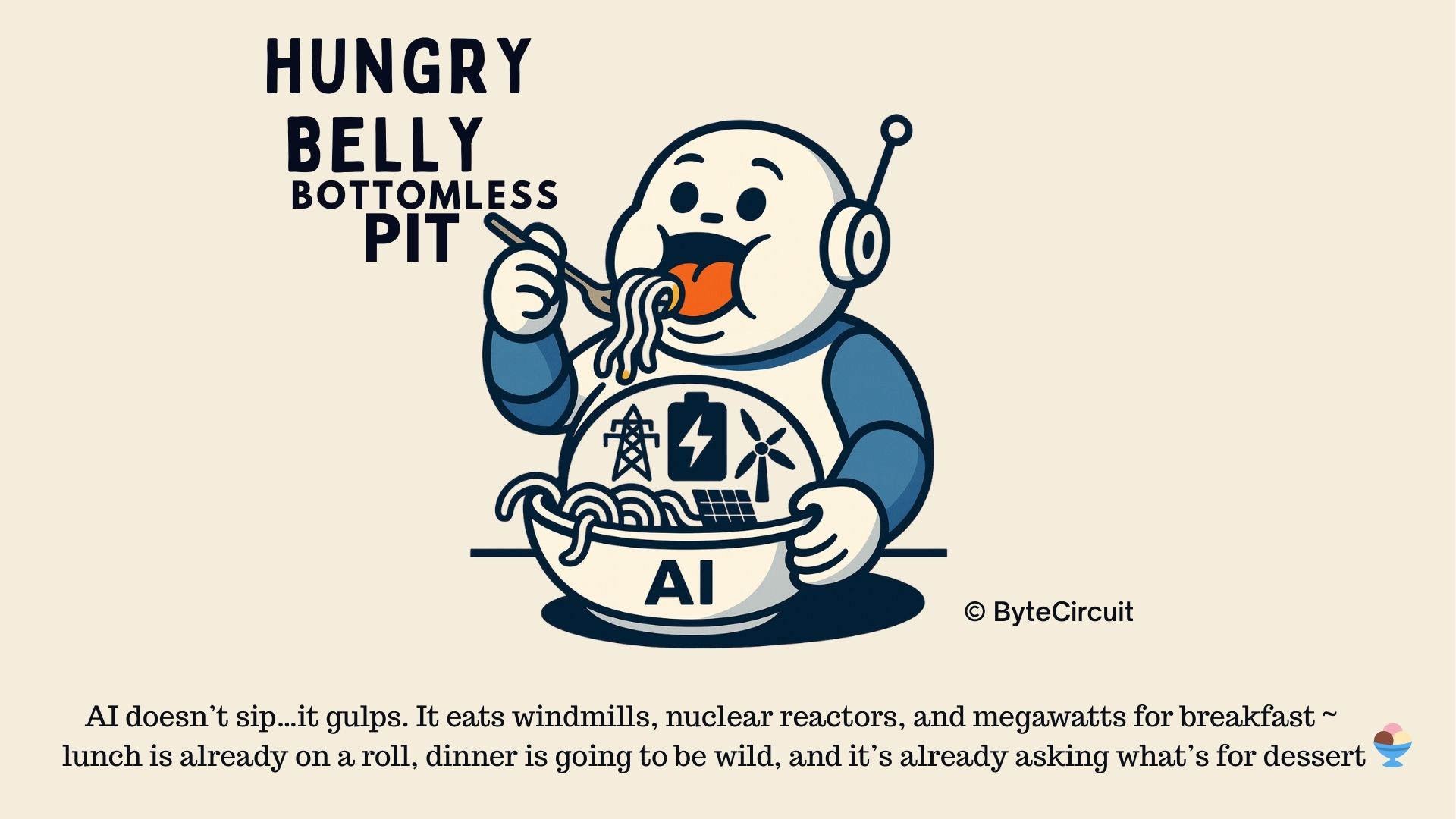
Earlier in September, Microsoft quietly joined the World Nuclear Association because AI is a hungry belly and a bottomless pit. AI doesn’t sip electricity…it gulps it. It eats windmills, nuclear reactors, and megawatts for breakfast ~ lunch is on a roll, dinner is going to be wild, and it’s already asking what’s for dessert🍨.
Training and running massive models takes the kind of juice that can light up a small city. Microsoft’s answer? Go nuclear. Literally. By joining the World Nuclear Association, they’re trying to make sure their AI future has a steady, carbon-free supply of megawatts.
Why it matters
Think about it: the chip arms race only works if the lights stay on. Data centers don’t run on good intentions. They need baseload power, the type you can’t get from a few extra solar panels or a windy night. That’s why nuclear suddenly looks less like an old school relic and more like AI’s insurance policy.
What this unlocks now
→ Tech companies officially linking AI strategy with energy policy
→ Nuclear repositioned as a growth lever for hyperscale AI
→ Renewables staying in the mix, but without nuclear the math doesn’t add up
→ Opens the door for other hyperscalers (Amazon, Google, Nvidia) to join the nuclear club
The bigger picture
Silicon innovation means nothing without watts to back it up. This move blurs the line between cloud architecture and energy infrastructure. Model roadmaps are now tethered to power plant roadmaps. If you can’t secure the megawatts, you can’t scale the models.
And here’s the kicker: the real AI bottleneck might not be GPUs, it might be gigawatts.
❓ So the question is…does your AI strategy include an energy strategy, or are you still betting the grid will figure it out for you?
🧩 Follow me, Kaylaa T. Blackwell and subscribe to ByteCircuit for more tech + utility breakdowns that help you connect the dots.