
The industry is still debating model performance.
But at enterprise scale, AI rarely fails at the model layer.
It fails at the integration, governance, and adoption layers.
After 15+ years leading hybrid cloud and IT-OT modernization in regulated, infrastructure-heavy environments, I’ve seen the same pressure points repeat across industries.
Different sectors. Same physics.
1️⃣ The Silicon-to-Infrastructure Gap
Most AI observability stops at the container.
In production environments, that’s not enough.
GPU metrics don’t account for:
• Power availability constraints
• Data locality requirements
• Security segmentation
• Audit and compliance controls
• Network and latency ceilings
Optimization at one layer can destabilize another.
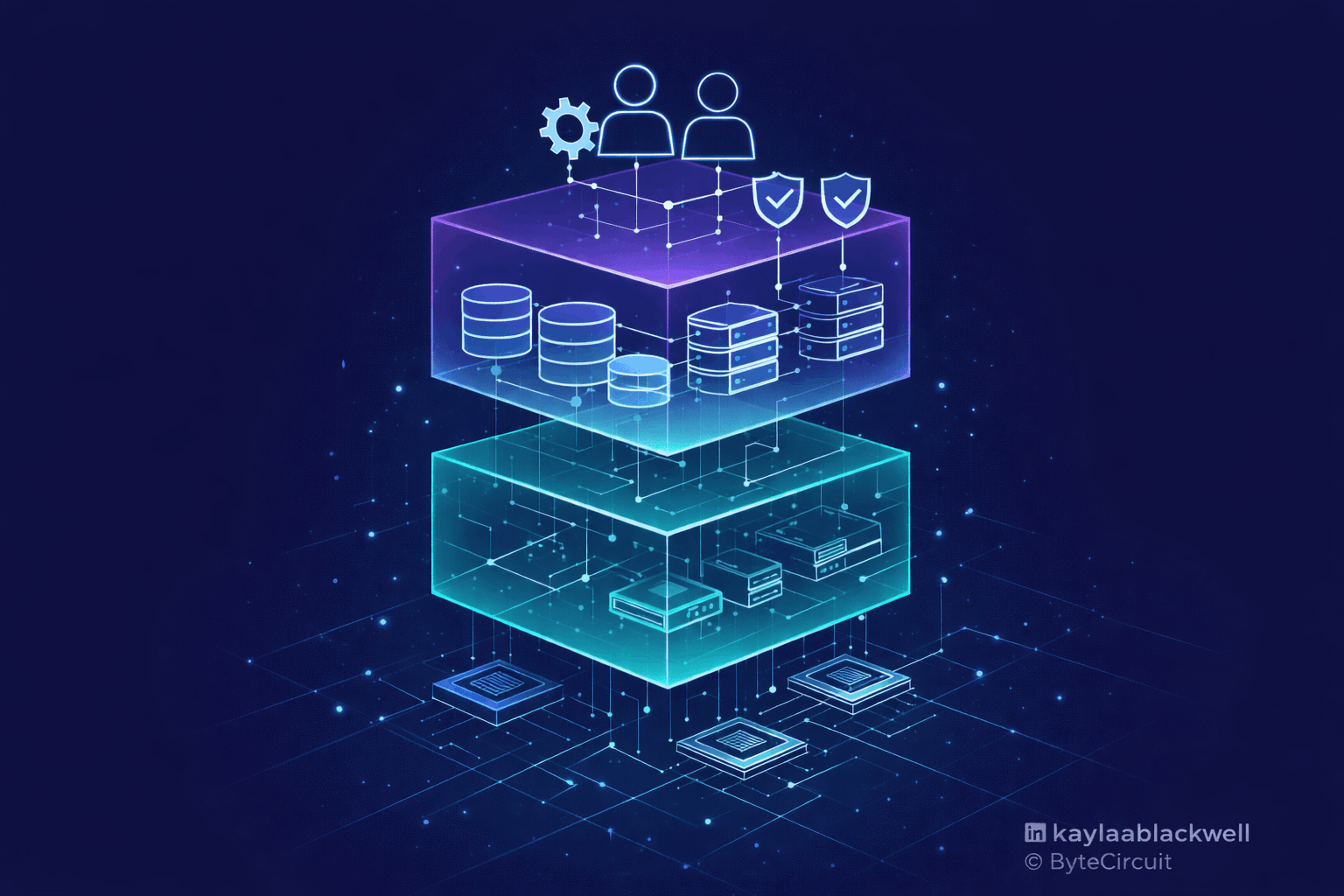
Standardizing AI implementation means bridging:
Hardware telemetry
→ Infrastructure orchestration
→ Security enforcement
→ Compliance logging
If that alignment isn’t engineered upfront, “it worked in the lab” becomes “it stalled in production.”
2️⃣ Integration Discipline Over Optimization
Speed is seductive.
But at enterprise scale, normalization beats acceleration.
AI must integrate cleanly into:
• ERP systems
• Data platforms
• Observability stacks
• Identity and access controls
• Operational systems of record
• Audit and retention frameworks
Abstraction layers matter.
Decoupling model lifecycle from hardware lifecycle prevents costly re-architecture every time silicon evolves.
This is especially critical in environments where infrastructure depreciation cycles span years or decades.
Optimization without standardization creates fragility.
Standardization creates survivability.
3️⃣ The Adoption Feedback Loop
Technical success is not the same as operational success.
If AI insights live outside the workflows operators already trust and use, adoption drops.
Dashboards become optional.
Optional tools become ignored.
Ignored tools become write-offs.
Closing the loop means embedding intelligence directly into existing systems and decision paths.
Not as a demo.
Not as a side dashboard.
But as part of the operating model.
I’ve led cross-functional architecture teams through this reality…where infrastructure, security, data science, product, and operations all have to align before anything scales.
💡The Bigger Picture
This is where digital adoption, governance, and human-centered design intersect with infrastructure architecture.
Silicon must respect infrastructure.
Infrastructure must respect policy.
Policy must respect operational reality.
When those layers move independently, scale breaks.
The model may be intelligent.
But the workflow must be intuitive.
That alignment work is the difference between experimentation and real enterprise transformation.
Not the benchmark.
The ecosystem.
If architecture doesn’t anticipate the constraint layer, the constraint layer eventually wins.
🧩 Follow me, Kaylaa T. Blackwell and subscribe to ByteCircuit for more tech breakdowns that help you connect the dots.
Join the discussion on LinkedIn: https://www.linkedin.com/posts/kaylaablackwell_ai-enterprisearchitecture-aiinfrastructure-activity-7432056004307116033-9hka